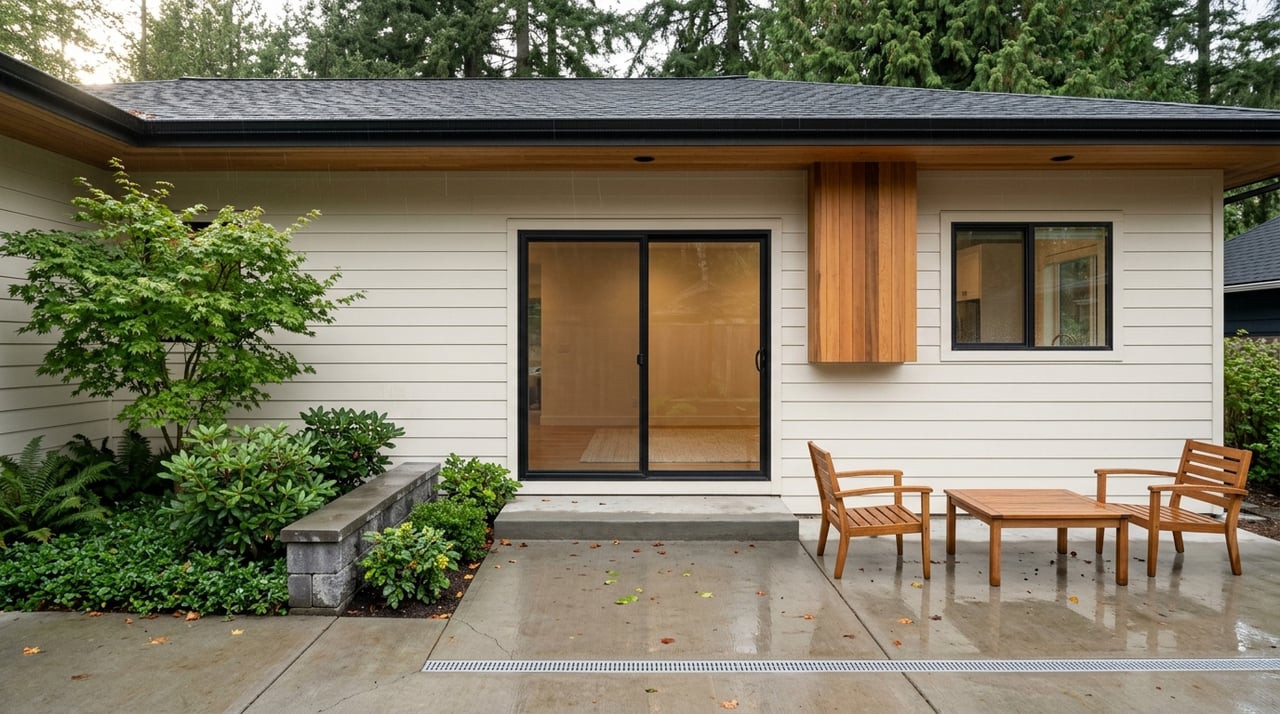
Proctor District Vs North End: How To Pick Your Fit
Trying to choose between Proctor District and Tacoma’s North End can feel harder than it sounds. On paper, they seem similar, and in real life, both offer established residential streets, local business districts, and access to some of North Tacoma’s most recognizable destinations. If you are weighing where you might feel most at home, the key is not asking which area is “better,” but which one fits your daily routine, housing goals, and lifestyle priorities. Let’s break it down.
One of the biggest sources of confusion is that Proctor District and the North End are not truly equal, side-by-side categories. According to the City of Tacoma, Proctor is best understood as a compact mixed-use center and the surrounding residential blocks, while the North End is the larger council area that includes Proctor along with subareas like Old Town, North Slope, Stadium, 6th Avenue, Jefferson, Buckley, and Puget Park / North Proctor.
That means if you are comparing Proctor District vs North End, you are really comparing a specific neighborhood hub to a broader collection of North Tacoma pockets. This matters because the North End can offer very different experiences depending on the exact area you choose.
Proctor tends to draw buyers who want a neighborhood-scale lifestyle with everyday convenience close by. The Proctor Business District serves as a key commercial area for the North End, with two major grocery stores, a farmers’ market on Saturdays during most of the year, and nearby services that support daily errands on foot.
The area also has a strong pedestrian focus. The city’s Proctor planning materials emphasize pedestrian safety and human-scale design, which supports the district’s compact feel and makes it easier to picture a routine centered around nearby shops, dining, and neighborhood services.
Proctor’s housing stock reflects a historic commercial-residential pattern, much of it dating from about 1905 to 1964. Surveyed building types include modest one-story homes, one- and two-story commercial buildings, and examples of Craftsman, Tudor Revival, Colonial Revival, Minimal Traditional, and Folk Traditional architecture.
Outside the district core, the area is described as primarily single-family with only a few vacant lots and scattered satellite commercial uses. For many buyers, that creates a more uniform feel, especially compared with the wider range of housing options found across the larger North End.
If your ideal day includes walking to pick up groceries, visiting the farmers’ market, or using nearby neighborhood amenities, Proctor may feel especially convenient. The area also includes the Union Avenue and Mason Avenue medians, which form part of the Mason-Union Loop walking trail, along with the Proctor Community Garden and access toward Puget Park and Puget Gulch.
These features give Proctor a very local, day-to-day livability. It is less about big destination-style recreation and more about having useful, comfortable amenities woven into your regular routine.
The North End usually fits buyers who want more choices in both housing and lifestyle. Because it includes several distinct subareas, your experience can vary a lot depending on whether you are looking near Old Town, North Slope, 6th Avenue, or another pocket.
That variety is often the biggest advantage. Instead of one central neighborhood identity, the North End offers several smaller nodes, each with its own mix of homes, commercial activity, and outdoor access.
Compared with Proctor, the North End has a wider range of housing types. Neighborhood descriptions note single-family areas, but also apartments, duplexes, condos, and mixed-use pockets depending on the subarea.
For example, North Slope includes everything from Victorian houses to apartment buildings from the 1950s. College Park includes Queen Anne, Colonial Revival, Tudor Revival, Minimal Traditional, and Craftsman homes. Old Town has newer condominiums and some higher-density homes near North 30th, while the 6th Avenue corridor has more multifamily housing than much of the North End.
If you want broader price-point and property-type options, or if you are still deciding between a detached home, condo, or something in between, the North End may give you more flexibility.
The North End generally offers a broader outdoor menu. Neighborhood materials describe access to major parks, the Commencement Bay waterfront, mature-tree residential streets, gulches, view corridors, and Ruston Way connections.
Old Town, for example, includes parks and waterfront businesses along Ruston Way, plus neighborhood-scale parks near North 29th and North 30th. Other parts of the North End offer strong open-space character or easy access to commercial corridors like 6th Avenue, North 34th, North 21st, and Proctor itself.
For buyers who want more of a choose-your-own-lifestyle setup, this can be a strong advantage. You may not get one single identity across the whole North End, but you do get more ways to shape the experience around what matters most to you.
If walkability is high on your list, this is one of the clearest differences. Proctor is often the stronger fit for buyers who want a concentrated, easier-to-understand walk-to-errands lifestyle.
That is because many basics are clustered within the business district. Groceries, the farmers’ market, nearby services, and neighborhood amenities are all part of the appeal, and the area’s planning priorities reinforce that pedestrian-friendly setup.
In the North End, walkability depends more on the exact subarea. Old Town has a commercial corridor on North 30th with services and restaurants, 6th Avenue is known for dining and nightlife, and other nodes serve as local retail centers.
So if you want walkability to be part of your everyday life without needing to study each block too closely, Proctor may feel simpler. If you are open to narrowing your search pocket by pocket, the North End can still offer strong walkability in the right location.
Both Proctor and the wider North End are mostly residential outside their commercial corridors, so commuting is more about access to key Tacoma routes and destinations than about one single in-neighborhood transit system. In the Proctor area, Pierce Transit Route 11 serves downtown Tacoma, Proctor, and the Point Defiance Ferry Terminal, while Route 16 connects parts of the area to downtown Tacoma and Tacoma Community College.
Across the broader North End, Route 10 serves Pearl Street and the Point Defiance Ferry Terminal, while Routes 11 and 16 also connect parts of the North End to downtown and other corridors. Planning materials for the area also emphasize sidewalks, bike lanes, and corridor-based development along places like Sixth Avenue and Union Avenue.
The practical takeaway is simple: commute convenience in both areas depends heavily on your exact block and your most common destination. That is especially true in the North End, where the neighborhood label covers a much larger and more varied geography.
The best way to choose between Proctor District and the North End is to start with your real-life priorities, not just the map. Think about where you want your easiest routines to happen.
If you are looking for a compact daily-life hub, Proctor often stands out. If you want more housing variety, more sub-neighborhood options, and stronger access to waterfront or larger outdoor destinations, the North End often gives you more range.
This is especially important in Tacoma’s North End. Because the area includes distinct sub-neighborhoods such as Old Town, 6th Avenue, North Slope, and Puget Park / North Proctor, your experience can shift a lot within the same broader label.
Even in Proctor, there is a difference between living close to the mixed-use core and living on nearby residential blocks. That is why a neighborhood search works best when you look beyond the headline name and focus on the streets, amenities, home types, and routines that match your goals.
A thoughtful home search is not just about finding a property. It is about choosing the version of daily life you want to step into. If you want help comparing Tacoma neighborhoods with a calm, strategic approach, the team at theeverhomeshomegroup.com is here to help.
Browse Other Articles
At EverHomes Home Group, we believe selling a home takes more than putting it on the market—it takes positioning, timing, strategy, and thoughtful execution. We work with motivated clients who value guidance, clarity, and a smarter approach designed to create stronger results without the pressure or noise.
Everhomes Home Group
[email protected]
(541) 707-7706
Open Hours
M0nday–Saturday: 8:00 am – 6:00 pm
Address
16400 Southcenter Pkwy Ste 306
Tukwila, Wa 98188