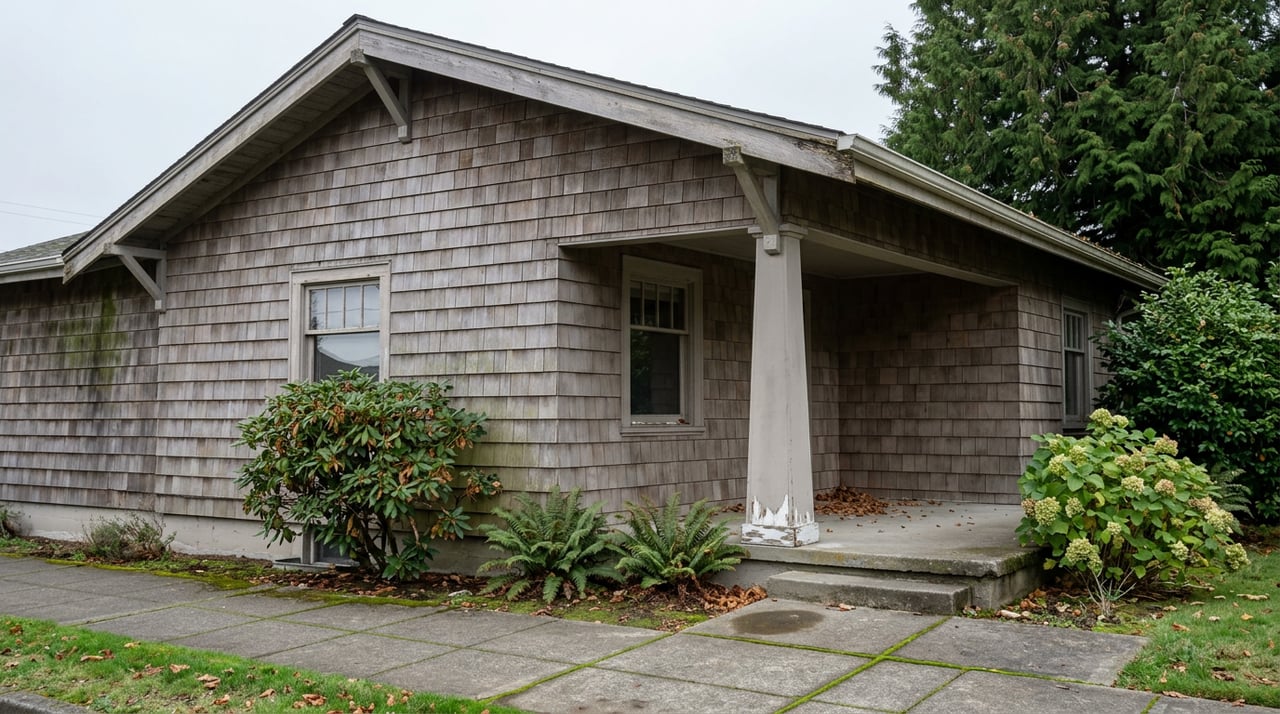
Tacoma Homes Are Selling in 9 Days. The Sewer Inspection Isn't.
Tacoma's market moves fast. As of July 2026, the average home sold in about 9 days, and homes selling above list price closed in as few as 4, according to Redfin's monthly tracking of the city. Sellers get multiple offers. Buyers waive what they can to compete. Everyone is optimizing for speed.
Then, somewhere between mutual acceptance and closing day, a video camera goes down a pipe nobody thought about, and the transaction slows to the pace of a municipal review queue. Tacoma requires a certified inspection of every home's private side sewer before the sale closes, and that single requirement does not care how fast the rest of your deal is moving.
Since October 1, 2010, Tacoma property owners have been required to get a certified inspection of their private side sewer, and any other sources of stormwater intrusion into the sewer system, before a home sale or transfer closes. The city calls the resulting document a Certificate of Inspection, and if you're selling, you need it in hand before escrow closes, not before you list, not before you accept an offer, before the sale is final.
The requirement covers essentially every residential sale in the city, as the city's own guidance for buyers and sellers lays out. Condos and certain title transfers are exempt, but a standard single-family sale is not. This is not a suggestion buried in a home inspector's checklist. It is a city-administered process with its own paperwork, its own review window, and its own way of finding out if you skipped it.
Here is what the requirement does not do: it does not force you to fix anything. The city's own guidance is explicit that the inspection produces a disclosure of findings, and any repair or replacement is left to negotiation between buyer and seller. A cracked pipe does not block your Certificate of Inspection. It just becomes part of the conversation at the negotiating table.
Most homes in Tacoma were built before 1950, and the side sewers running from those homes to the city's main lines have rarely been replaced. Buildings from before 1980 are especially likely to still have clay or concrete side sewer pipe, materials that crack, shift, and let tree roots in over decades underground. The city's own tip sheets recommend a closer look at any side sewer more than 25 years old or built from anything other than PVC.
That is the reason the rule exists at all. It was not written for a hypothetical newer suburb with plastic pipe throughout. It was written for a city where the housing stock is old enough that a meaningful share of side sewers have never been inspected, and where a hidden failure can surface as a sewage backup instead of a line item on a report. The rule applies to every sale regardless of a home's age, but it earns its keep on the older side of Tacoma's housing stock, which is most of it.
A contractor threads a video camera through a cleanout, an access point usually found outside along the side of the house, or in a garage, crawlspace, or basement. If your home doesn't have a cleanout, and plenty of older houses don't, the contractor may need to install one or, in some cases, remove and reset a toilet to get the camera into the line. The full video and a written report then go to the City of Tacoma's Environmental Services office at the Center for Urban Waters on East D Street. From there, the city has up to five business days to review the submission and issue the certificate.
None of this is expensive on its own. Here is what the numbers actually look like when you put them side by side:
| Step | Typical Cost or Time |
|---|---|
| Certified side sewer inspection | $200 to $400 |
| City review of submitted report | Up to 5 business days |
| Side sewer repair or replacement, if the camera finds a real problem | $5,000 to $10,000 on average |
The inspection itself is a rounding error against a Tacoma closing statement. The repair, if one turns out to be necessary, is a real number worth planning for. But look again at that middle row. Five business days is a full week, and that clock doesn't start until a completed report lands at the city's office, which means it doesn't start until a contractor has already been scheduled, gotten access to the property, run the camera, and written up the findings. In a market where the average sale closes in 9 days, that sequence can eat most of your calendar before you've even gotten to the buyer's own inspection contingency.
This is the part that catches sellers off guard, and it isn't the cost or the pipe condition. It's the arithmetic. The city recommends getting at least three written bids before choosing a side sewer contractor, which is sound advice for avoiding an inflated quote, but it also assumes you have time to collect three bids. If you start that process after you've already accepted an offer in a market moving at Tacoma's current pace, you are asking a multi-step municipal process to fit inside a window that was built around a much faster, much simpler transaction.
The city also checks its own sales records against submitted inspection certificates after the fact, which means skipping the step doesn't quietly disappear. It tends to resurface as a closing problem instead of a listing problem, at exactly the point in the transaction when neither side wants a new one.
Finding a cracked or root-intruded line on camera is not the end of a sale. The city's requirement is disclosure, not repair, so a seller can list the findings and let the buyer factor them into an offer, a credit, or a repair request, the same way any other disclosed condition gets handled. If a homeowner does want to address it before or during a sale, Tacoma's Sewer Conservation Loan Program offers low-interest financing for side sewer repair or replacement, which is worth knowing about before assuming a failed line means an out-of-pocket surprise at closing.
What changes the calculus is timing, not outcome. A seller who gets the inspection done during listing prep has room to decide, calmly, whether to fix a problem or disclose it and move on. A seller who discovers a cracked pipe five days before a scheduled close is negotiating from a much weaker position, with a buyer who has every reason to ask for more than the repair would have cost on its own terms.
The fix here isn't complicated. It's sequencing.
None of this changes what the camera finds underground. It just moves the discovery to a point in the transaction where you still have options.
Who pays for the side sewer inspection, the buyer or the seller? The ordinance itself doesn't assign responsibility. It only requires that the certificate exist before closing. In practice, this is one more line item that gets settled between buyer and seller like any other, and it's worth raising early rather than assuming the other side will cover it.
Does a newer home with PVC pipe still need the inspection? Yes. The point-of-sale requirement applies to essentially every residential sale in Tacoma regardless of the age or material of the pipe. The 25-year and PVC guidance is separate advice about which homes are most likely to need a closer look, not a carve-out from the closing requirement itself.
What happens if I just skip it? The city compares completed sales against submitted inspection certificates, so it doesn't stay unnoticed. It tends to surface as a delay or a compliance problem at or after closing, which is a worse place to deal with it than during listing prep.
Tacoma's market rewards sellers who are ready before the offers start coming in. A side sewer certificate is a small line item that can quietly become the tightest part of your timeline if it's left until the deal is already moving. If you're weighing when to start that process, or how a disclosed line condition might affect your asking price, EverHomes Home Group can walk through the sequencing with you before you list. Get in touch when you're ready to talk timing.
Browse Other Articles
At EverHomes Home Group, we believe selling a home takes more than putting it on the market—it takes positioning, timing, strategy, and thoughtful execution. We work with motivated clients who value guidance, clarity, and a smarter approach designed to create stronger results without the pressure or noise.
Everhomes Home Group
[email protected]
(541) 707-7706
Open Hours
M0nday–Saturday: 8:00 am – 6:00 pm
Address
16400 Southcenter Pkwy Ste 306
Tukwila, Wa 98188